Close coupling (close coupler)
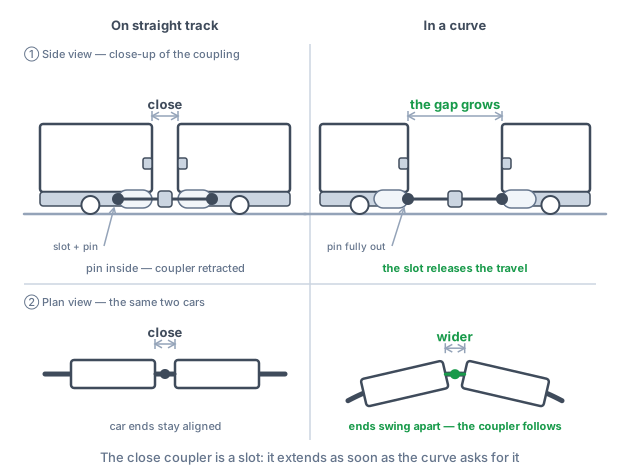
A close coupler keeps adjacent cars tight together on straight track but lets the gap open automatically in curves. This is done by the close-coupling mechanism — a small guide (standardised via the NEM 362 socket): a slot with a pin in it. On straight track the pin sits at the inner end, the coupler is retracted and the cars stand nose to nose. In a curve the pin travels outwards, the coupler extends, and the gap grows by exactly as much as the curve asks for.
It looks prototypical but is sensitive to tight radii and S-curves: there the car ends swing out sharply and the mechanism can bind. What decides is the direction of the force. Pulled, the train keeps the couplers extended. Pushed — downhill, for instance — they are squeezed shut and jam in the retracted position; where the curvature jumps they cannot extend all at once, and the leading car is pushed off the track (plan-check rule “Curvature change on grade”). Long, close-coupled vehicles therefore need more generous radii and straight sections between reverse curves than rigidly coupled ones.