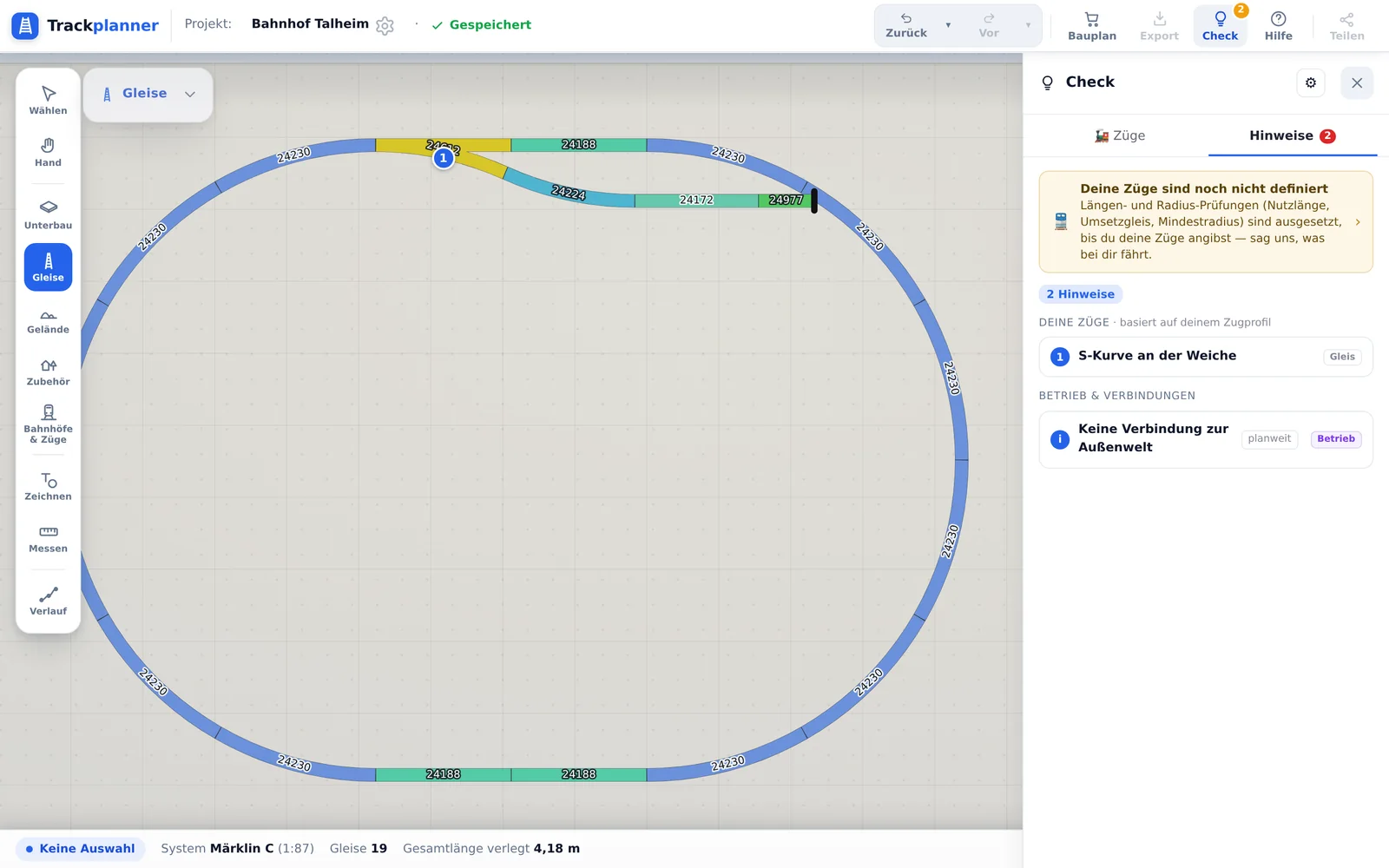
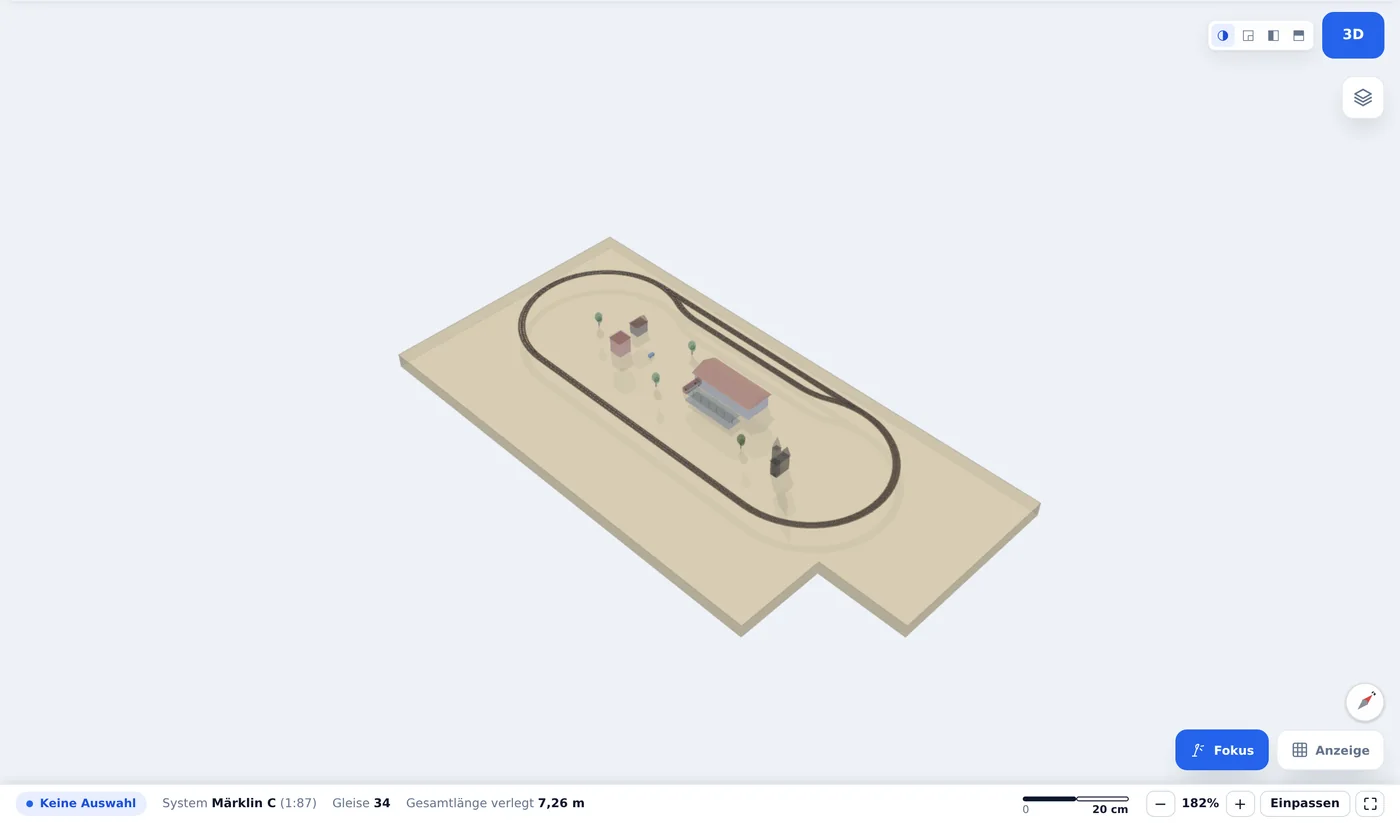
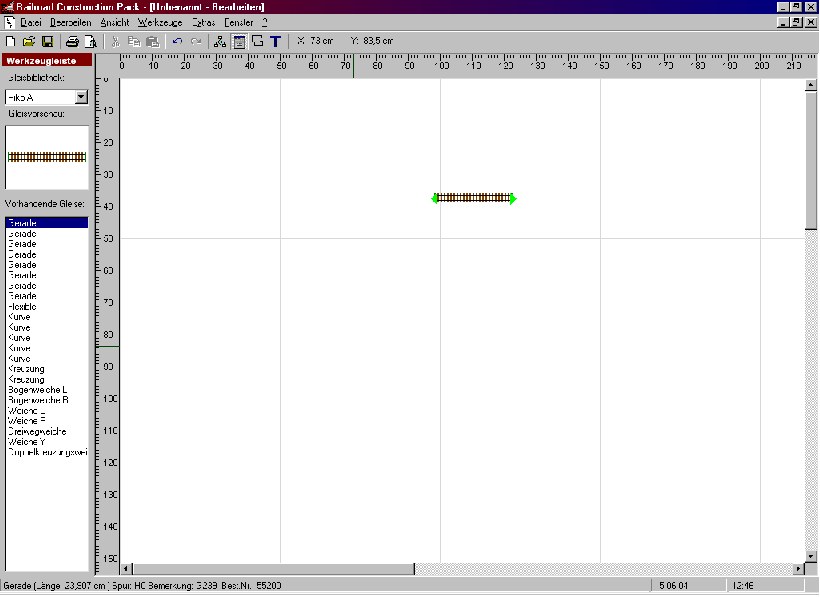
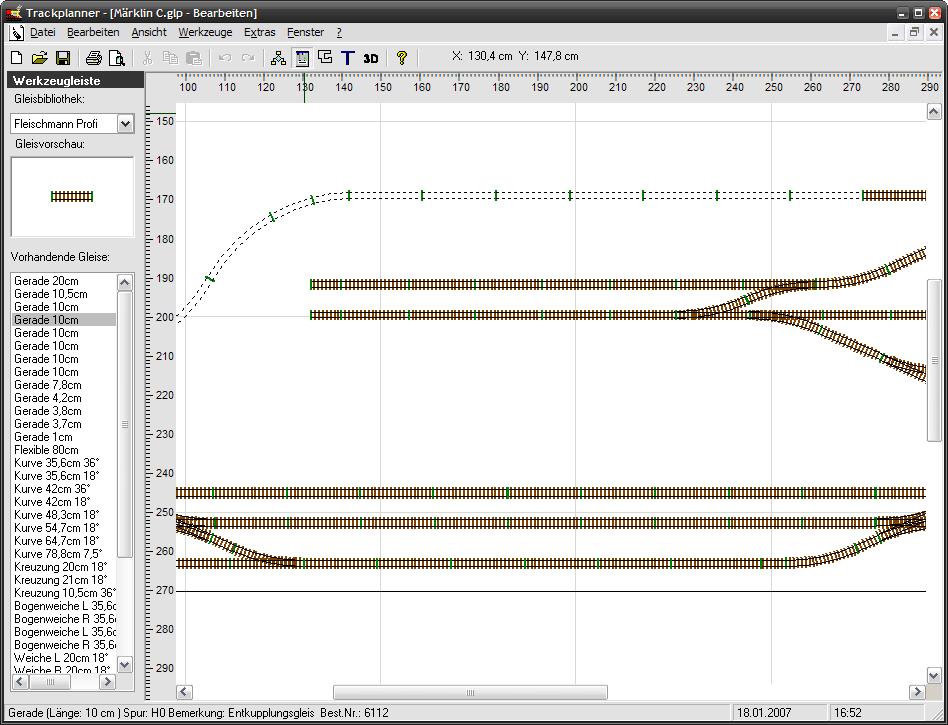
Trackplanner is track planning software for model railway layouts. It runs in the browser, a plan you have already laid can be reshaped at any time, and several people can carry on building one plan together. Georg Wächter wrote the first version in 2004, aged 16.
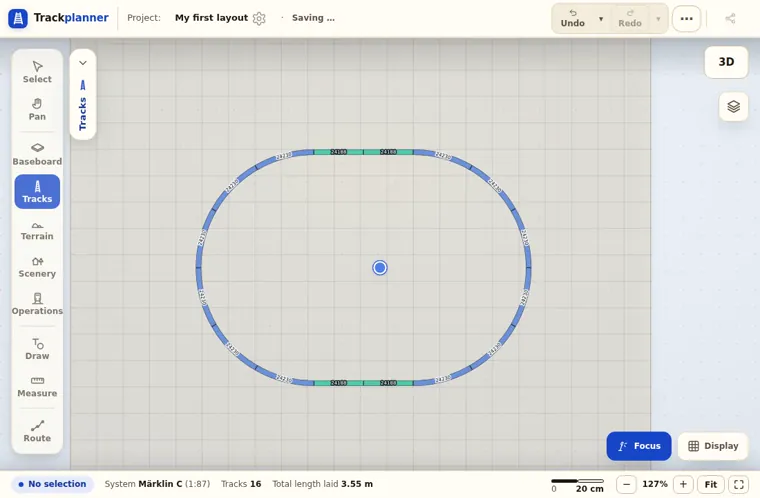
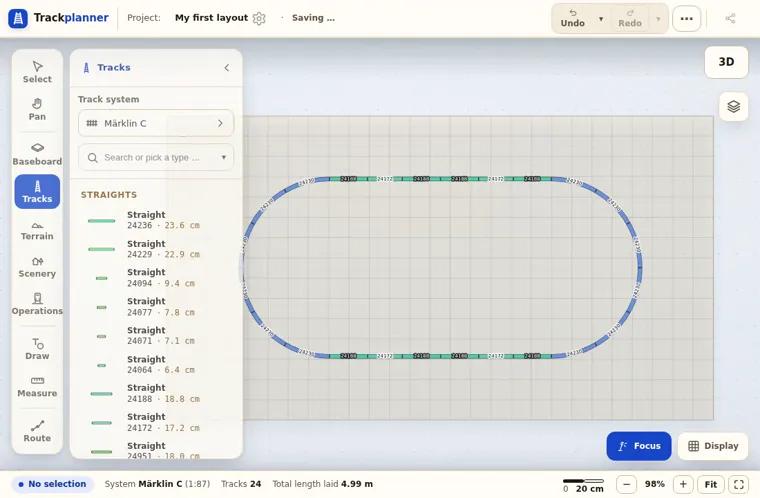
The oval gets longer and the software puts the straights together again from catalogue pieces. A still cannot show it, which is why the clip sits here and is available to download below.
I answer enquiries myself, usually within two working days. For a review there are 30 days of Premium with no payment details: a short email naming your publication is enough.
The figures come from the application's library index and grow with every system added. They are in the press kit too, from the same source. Please cite them with the date.
An offer to editors Nobody else knows what a model railway layout costs: retailers know orders, magazines know layouts. Trackplanner knows the parts list and the prices of every public track plan. For a story we will analyse one question from that data, anonymised and aggregated. Your question and your deadline are enough: info@trackplanner.io
What we can talk about
Even when no announcement is due, there are subjects we can say something solid about.
What a layout costs Material cost per square metre and per scale, starter set against buying singly, and where the money goes missing.
The most common planning mistakes Radii too tight, gradients too steep, platform roads too short. Why they almost always show up only on the board.
Track systems and factory dimensions Who supplies which geometry, where systems fit together and where they do not, what integrated roadbed changes.
When a file format dies What becomes of track plans when 2004 software stops starting. Import from WinTrack, AnyRail, XTrkCAD and our own old version.
A hobby across generations Who plans today, how old the audience really is, and what happens when a grandfather and a grandson build the same layout.
Freemium in a small market How software for a hobby pays for itself, what affiliate links change about that, and why one person stands behind Trackplanner.
Short profiles to copy
The same thing at three lengths: for the caption, for the paragraph, for the box. One click puts the text on your clipboard.
50 words
Trackplanner is track planning software that runs in the browser. A plan you have already laid can be reshaped at any time although it is made of real catalogue parts: stretch ovals, slide turnouts, open out radii. Other people's plans can be taken over and built on, and a shopping list comes out at the end. Relaunch: 1 October 2026.
100 words
Trackplanner is track planning software for model railway layouts and runs in the browser with nothing to install. What sets it apart: a plan you have already laid can be reshaped at any time, like a sketch, although it is made of 1,727 real catalogue parts from 63 track systems. Pull an oval longer and the software rebuilds the section from suitable pieces; a turnout is a movable anchor that lets the siding beside it grow with it. Every plan has an address where others can view it, take it over and build on it, several at once. At the end Trackplanner writes a shopping list and works out whether a starter set beats buying singly. Planning is free.
250 words
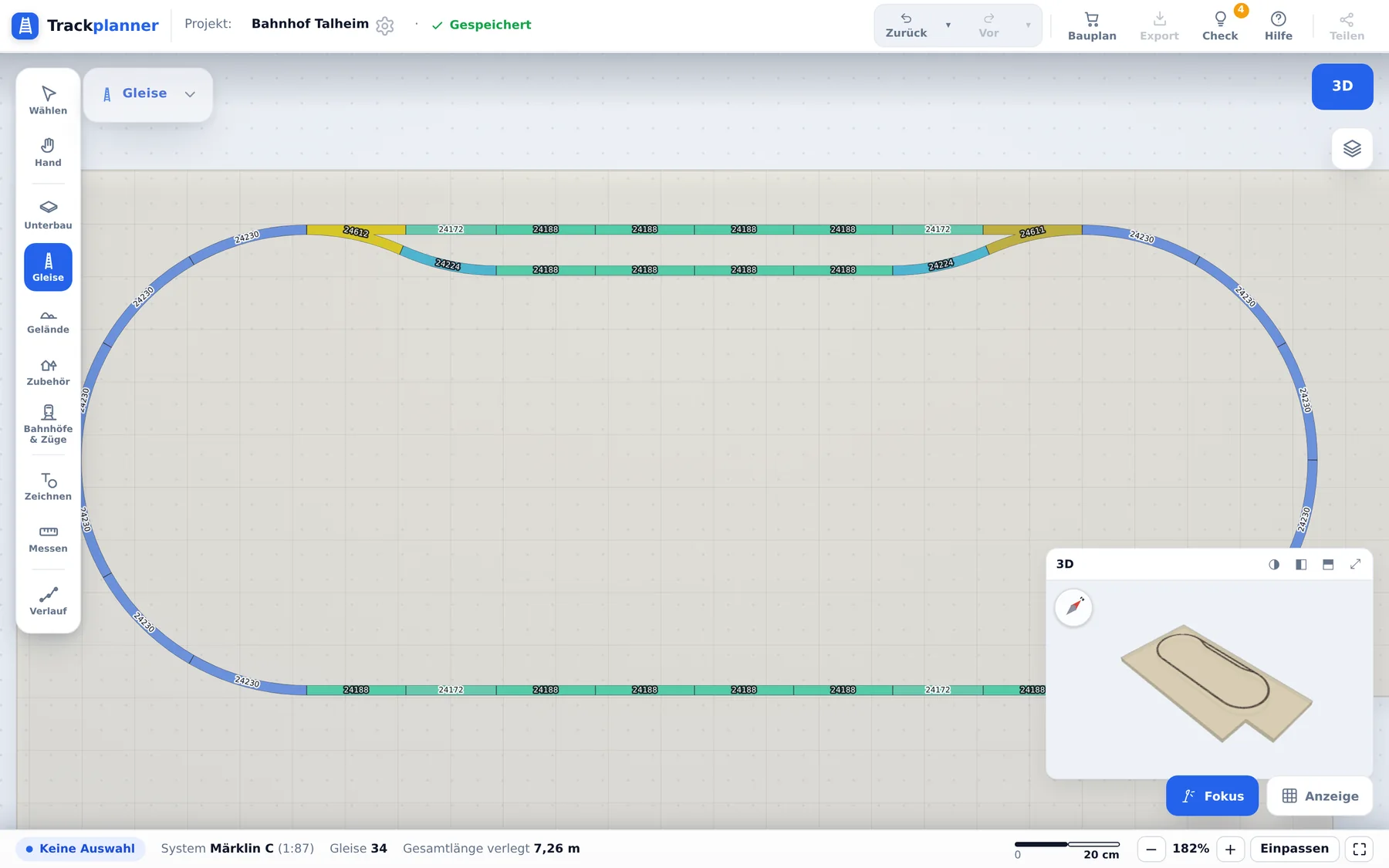
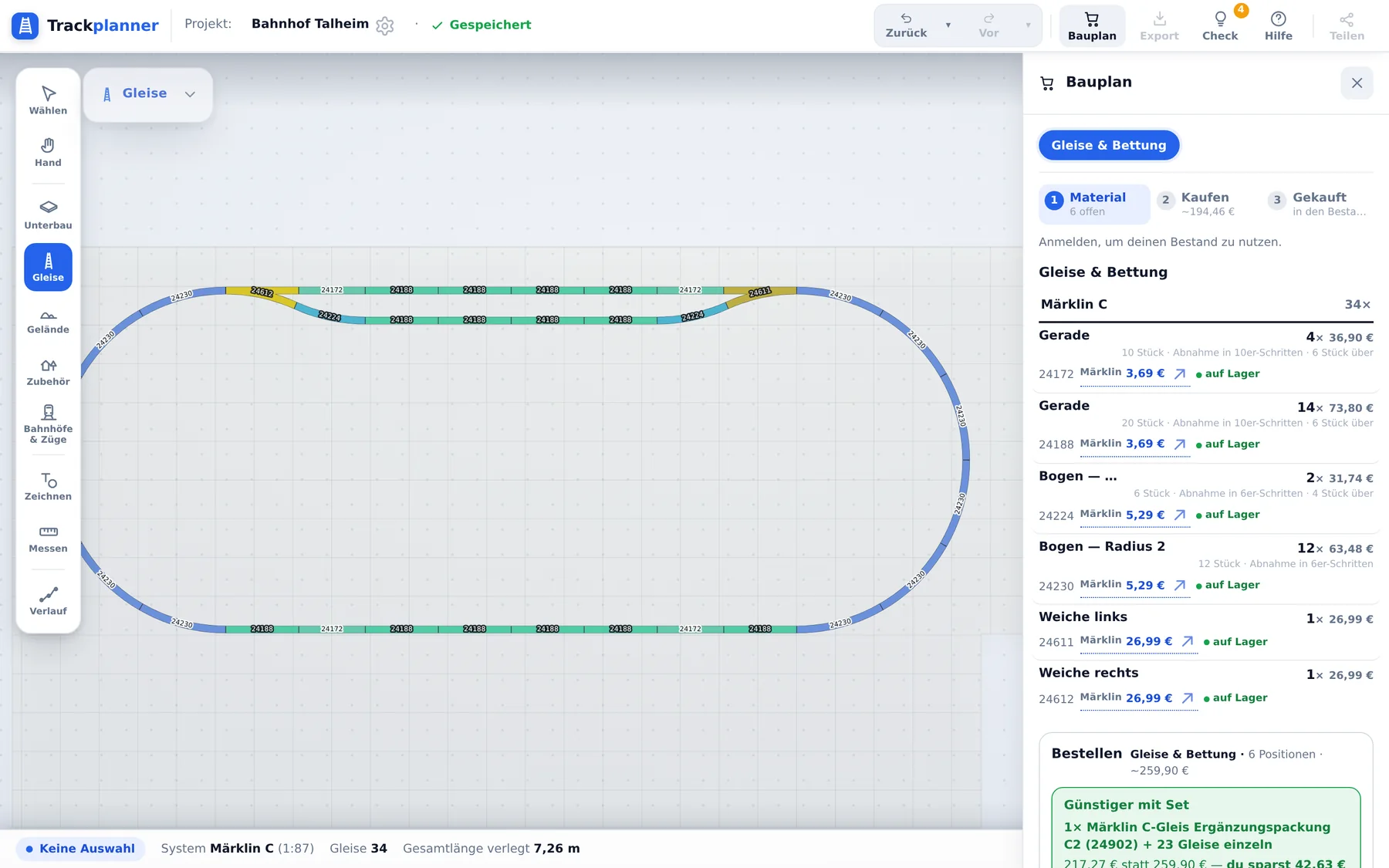
Trackplanner is web-based track planning software for model railway layouts. Georg Wächter wrote the first version in 2004, aged 16, for Windows; it was picked up by the hobby press and downloaded for years. On 1 October 2026 it returns, rebuilt from scratch, as an application in the browser. Track planning has been rigid because a plan consists of parts with fixed dimensions. If your oval is twenty centimetres too short, you pull it apart and lay it again. Trackplanner solves that with handles: pull on an oval and it gets longer while the software rebuilds the stretched section from real catalogue pieces, with flexible track only as filler. A turnout on the running line is a movable anchor that lengthens or shortens the siding beside it. Radii can be opened out by a step without the loop coming apart. The second difference is in the sharing. Every plan has an address where anyone can view, orbit and measure it without an account. With an account it can be taken over into your own space and rebuilt, so someone else's station can join your own route. The plan records where it came from. Several people can work on one plan at the same time, from a grandfather and his grandson to a club planning its layout with all its members. At the end the plan becomes a parts list with part numbers, quantities and prices that can be handed to a retailer's basket. Trackplanner works out whether a starter set plus a few single pieces would beat buying piece by piece, and says so when it would not. Planning is free. Premium costs €5.99 a month. The provider is a one-person business in Berlin.
Announcements
No announcements yet
The first one comes with the launch on 1 October 2026. If you would like it in advance under embargo, send an email — the distribution list is made of addresses, not of a form.
Credit: Trackplanner / Georg Wächter. Not to be passed on to third parties, and the logo is not to be altered.
Quotes free to use
“A model railway layout is never finished, there is always one more idea. The software has to cope with that without making you start over every time.”
Georg Wächter, Founder and developer
“A grandfather plans in the cellar, his grandson lives a hundred kilometres away and joins in from his own computer. That is the case I thought about most while building this. If you are sitting side by side at the same table, you do not need software for it.”
Georg Wächter, Founder and developer
“Twenty years ago I built the program because nothing like it existed. Today I am rebuilding it because my children want to use it.”
Georg Wächter, Founder and developer
The full press kit
15 pages: press release, fact sheet, the story behind it, quotes, an asset list, pricing and the questions editors tend to ask. The same figures as above, from the same source.