Helix grade
Work in progress: This section is still a work in progress — content is being added and revised continuously.
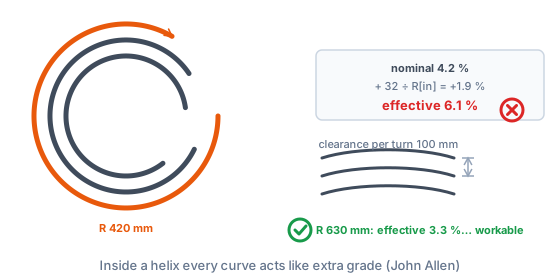
What is checked? For every detected helix: the effective grade — nominal grade plus the curve-resistance surcharge after John Allen’s rule of thumb (32 ÷ radius in inches, in percentage points). Additionally: helix radius below the practical minimum.
Why does it matter? Inside a helix every curve acts like extra grade. The calculation that surprises everyone: R = 420 mm with 10 cm clearance plus 12 mm of roadbed, i.e. 112 mm per turn, gives 4.2 % nominal — plus 1.9 points curve surcharge makes 6.1 % effective. Hardly any locomotive hauls more than itself up that. Hence: below ~630 mm radius an H0 helix practically never works.
How to fix it: Enlarge the radius (works twice: less surcharge AND more travel per turn), minimise the per-turn clearance, or gain the height elsewhere (open ramp, raising the zero level).
Numbers & defaults: limit = grade limit (2.5 %); minimum radius 630 mm (H0, scaled).